Form & Light, teens and adults
How to draw An Egg and Its Shadow
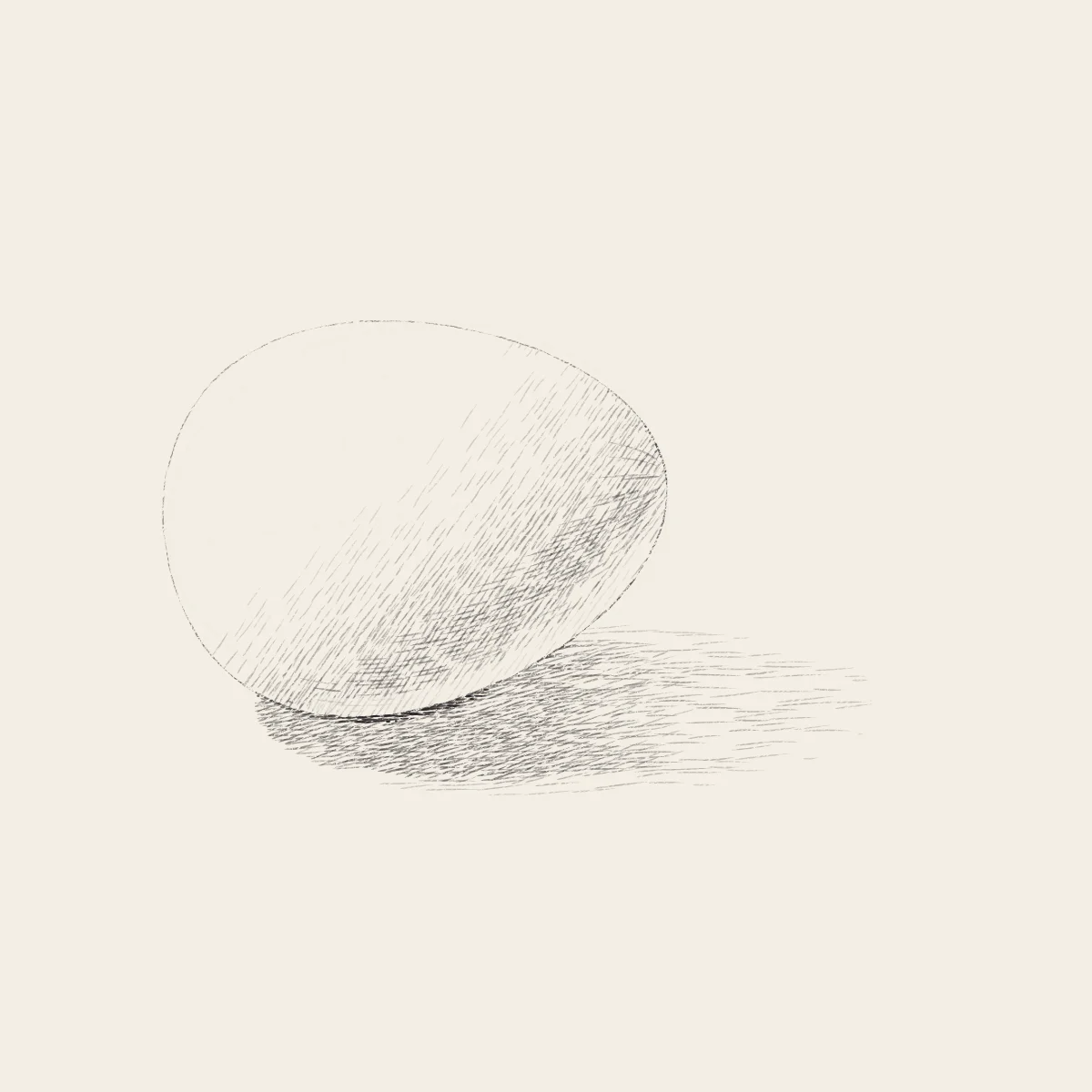
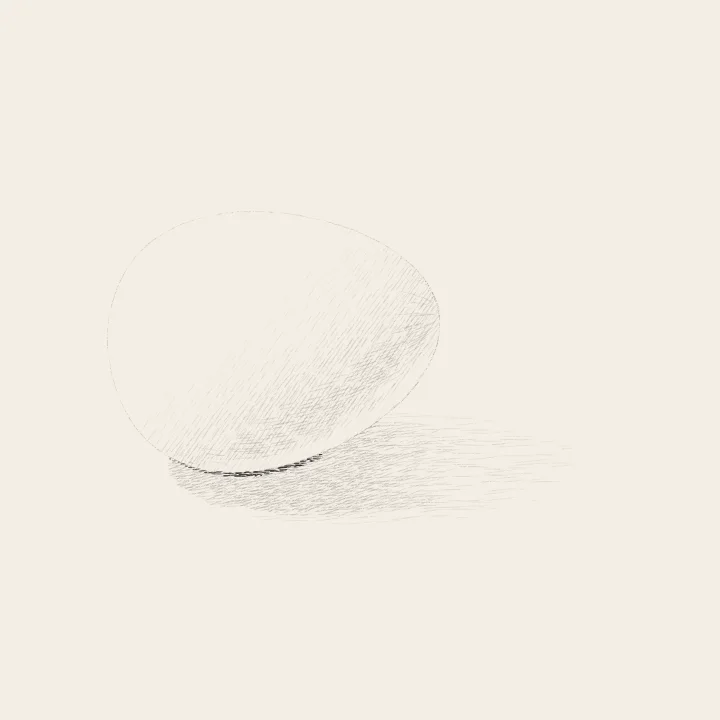
An egg is a sphere stretched into an ovoid, one end rounder than the other. Lay it on its side and keep almost all of it paper-light: a soft core shadow, a strong reflected light, a long soft cast shadow and one crisp dark where it touches the table do all the work.
- Level
- Easy
- Time
- 30 minutes
- Steps
- 7
- Ages
- 13 and up
How to draw An Egg and Its Shadow
What you need
- Drawing paper Cartridge or sketch paper with a little tooth.
- Blue pencil A light blue col-erase pencil, or a very light HB.
- Graphite pencils HB and 2B; a 4B or 6B for the darkest darks.
- Kneaded eraser Press and lift; pinch it to a point for highlights.
- Sharpener A sharp point makes cleaner hatching.
Step by step
-
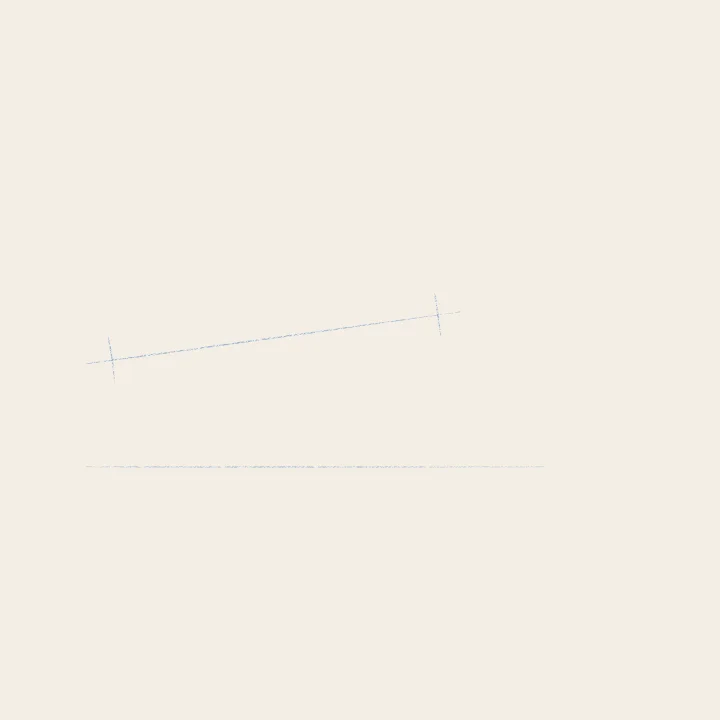 01
01Placement
The long axis
Draw the table line, then the egg’s long axis, tipped a little as it lies there. Tick its two ends.
-
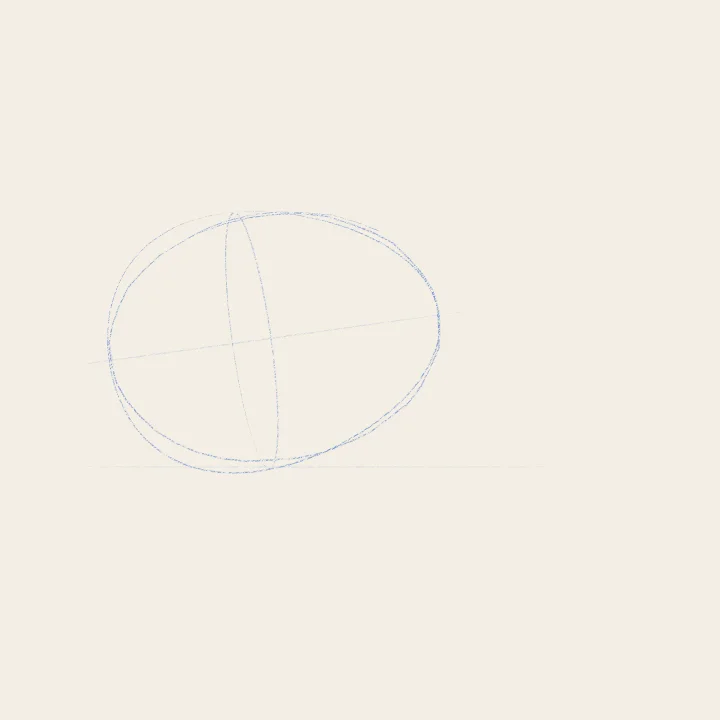 02
02Big shapes
An ovoid, not an ellipse
Swing an ellipse along the axis, then narrow the right end: an egg is widest a little toward its round end.
-
 03
03Construction
A light contour, lift the blue
Go over the outline so lightly on the lit side that it almost disappears. Only the underside gets a firm line. Lift the blue.
-
 04
04Light and shadow
One soft core shadow
The egg’s only real value: a soft core shadow along the lower right, just past where the light turns away.
-
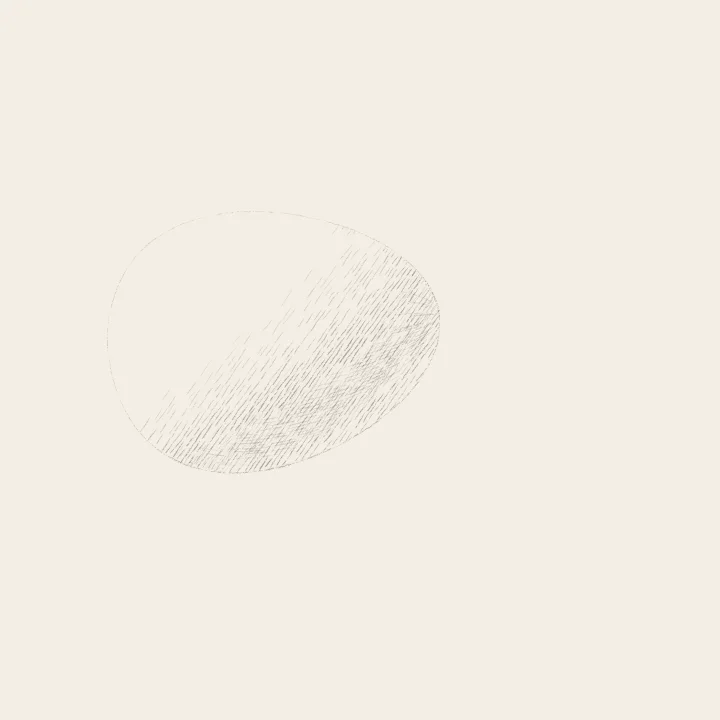 05
05Light and shadow
Halftones, then lift the reflected light
Let the halftone fade out into the light well before the top. Then lift a strong reflected light along the underside.
-
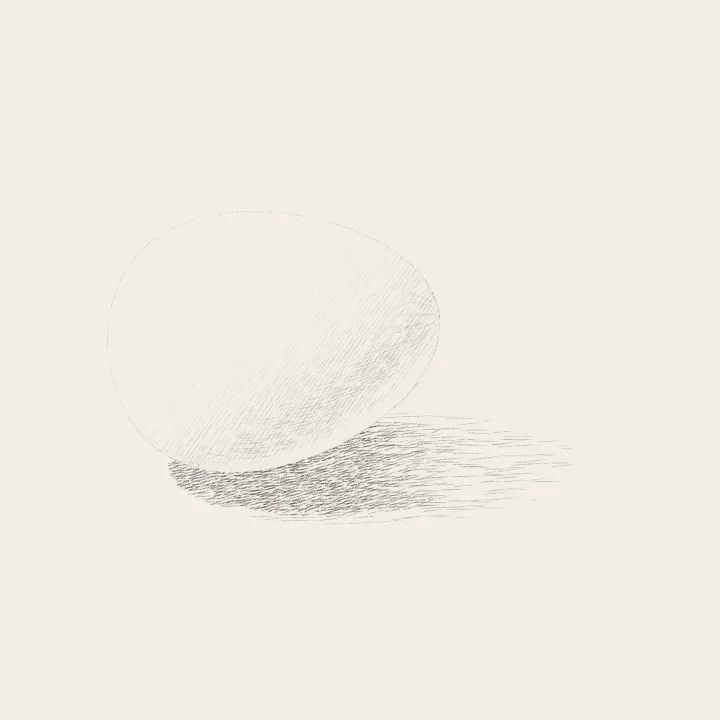 06
06Light and shadow
The long, soft cast shadow
The cast shadow is the egg’s shape thrown across the table: longer than the egg, darkest near it, fading and softening to nothing.
-
 07
07Finishing touches
The one crisp dark
Now the only dark in the drawing: a thin, sharp occlusion line where the egg touches the table. Then stop.
Teens and adults