Animals from Life, teens and adults
How to draw A Songbird on a Twig
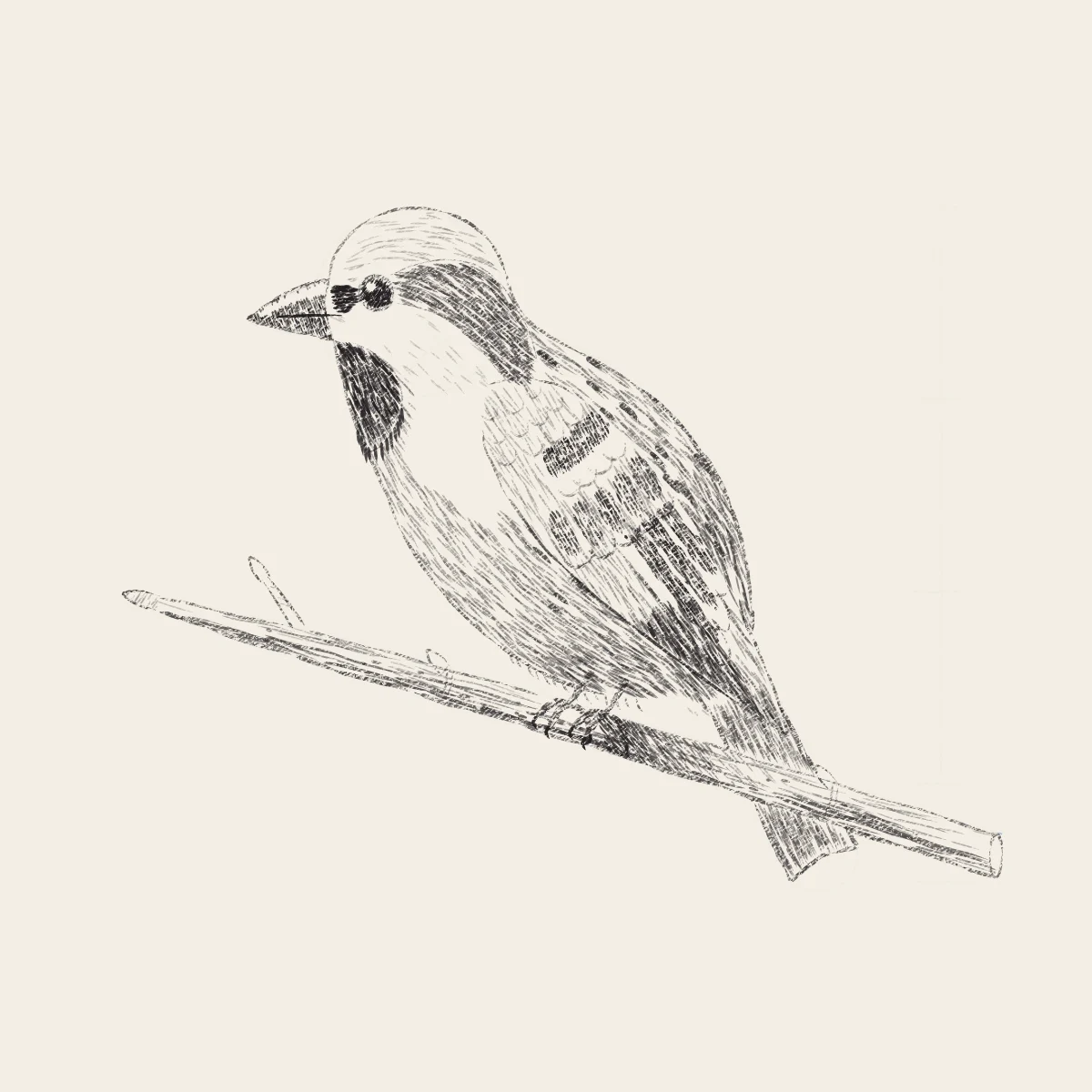
A male house sparrow perched in profile. Build it from an egg and a circle, find the wedge beak and its gape line, then draw the folded wing the way it is made: scalloped coverts, a white bar, long tertials and primaries. Value comes from two things at once, the bird's pattern and the light.
- Level
- Intermediate
- Time
- 45 minutes
- Steps
- 9
- Ages
- 13 and up
How to draw A Songbird on a Twig
What you need
- Drawing paper Cartridge or sketch paper with a little tooth.
- Blue pencil A light blue col-erase pencil, or a very light HB.
- Graphite pencils HB and 2B; a 4B or 6B for the darkest darks.
- Kneaded eraser Press and lift; pinch it to a point for highlights.
- Sharpener A sharp point makes cleaner hatching.
Step by step
-
 01
01Placement
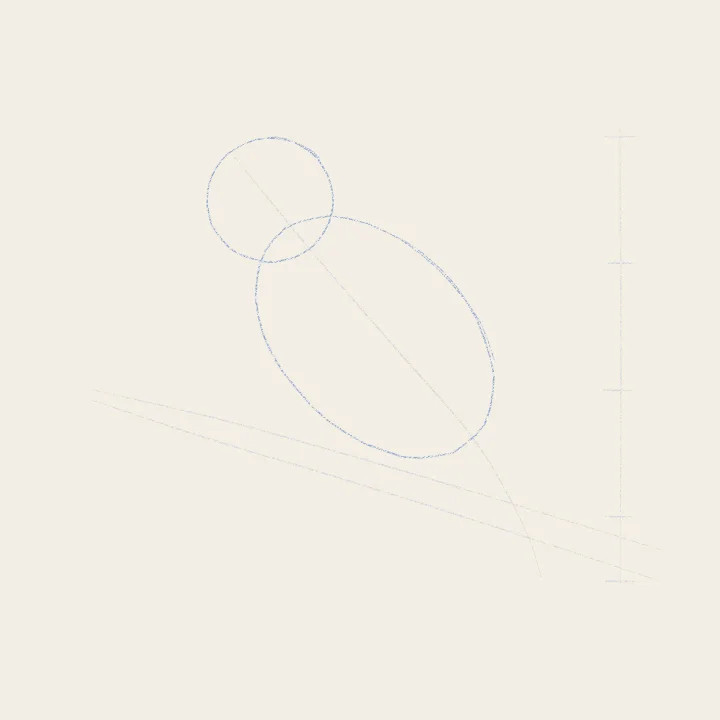
The twig and the tilt
A diagonal twig, then the bird's tilt: a line from crown to tail tip, about three and a half head circles long.
-
 02
02Big shapes
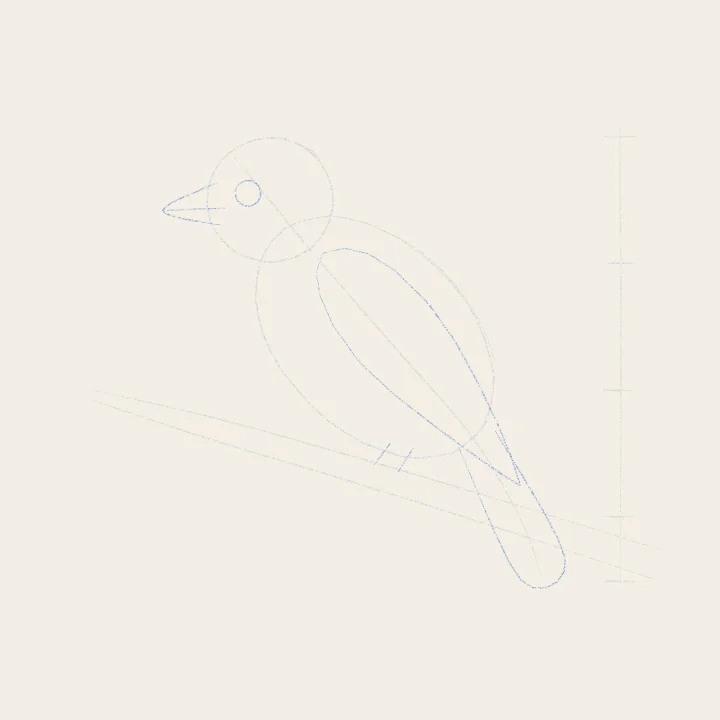
Egg and circle
An egg for the body, tipped along the lean, big end forward; a circle for the head, sunk into its top. No neck.
-
 03
03Construction
Beak, eye, wing, tail
A wedge for the beak, split by the gape line; the eye just above it; a teardrop wing; a long tail; two short legs.
-
 04
04Construction
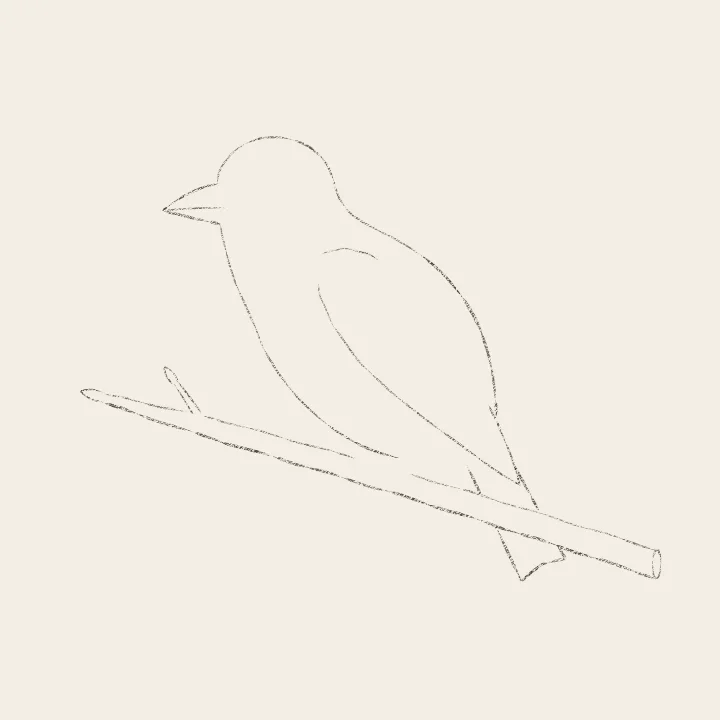
Commit to the outline
Graphite over the blue: crisp at the beak and along the shadow side, soft where feathers fluff. Then lift all the blue.
-
 05
05Construction
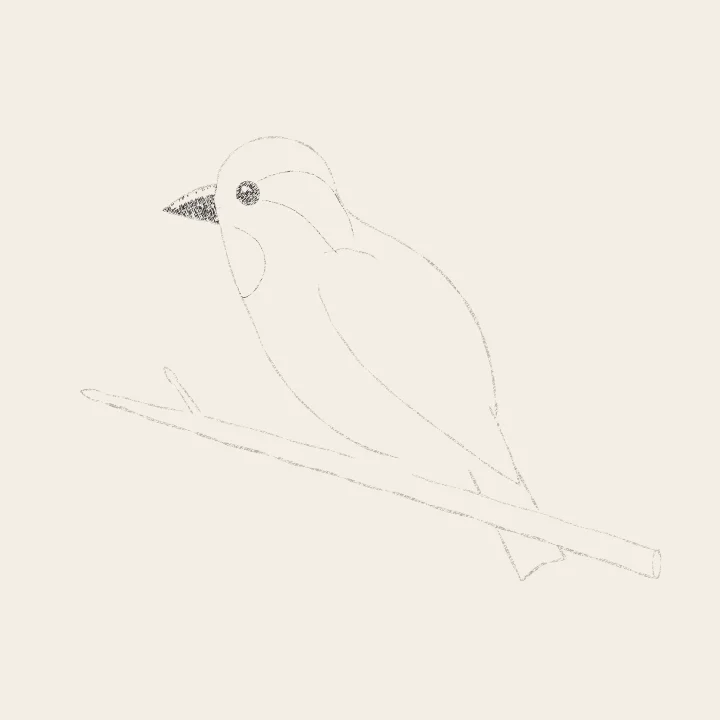
Beak, eye and the head's pattern
Darken the beak but keep a light ridge on top; a round dark eye with a catchlight; then map the cap, cheek and bib.
-
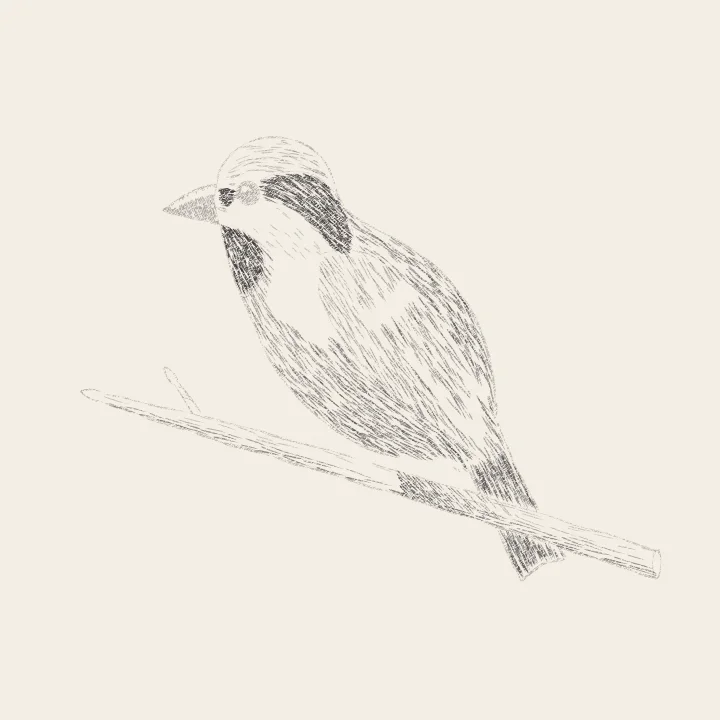 06
06Light and shadow
Pattern and light
Value comes from two things: the pattern (black bib, chestnut band, brown back) and the light. Keep the breast and belly lightest.
-
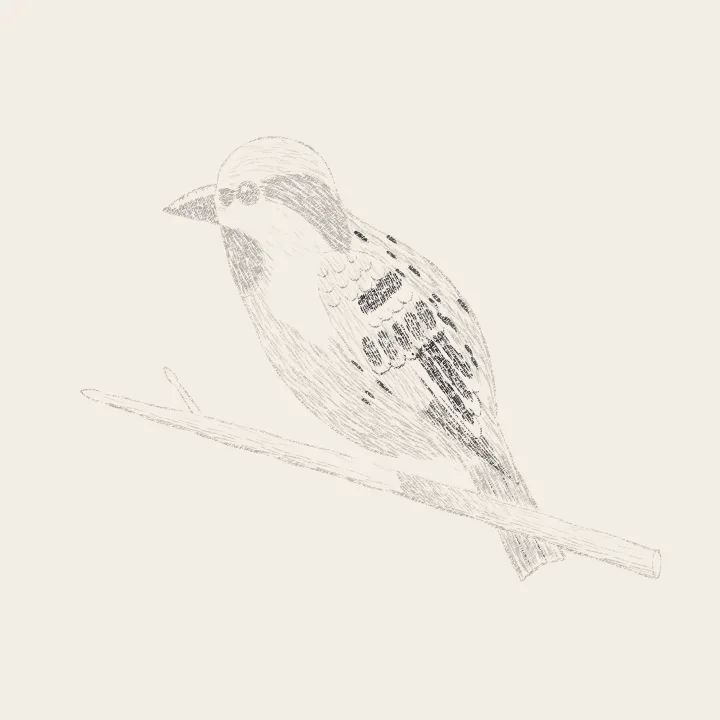 07
07Details
The folded wing
Rows of scalloped coverts, a white bar, then long tertials with pale edges and the primaries beyond. Streak the back; edge the tail.
-
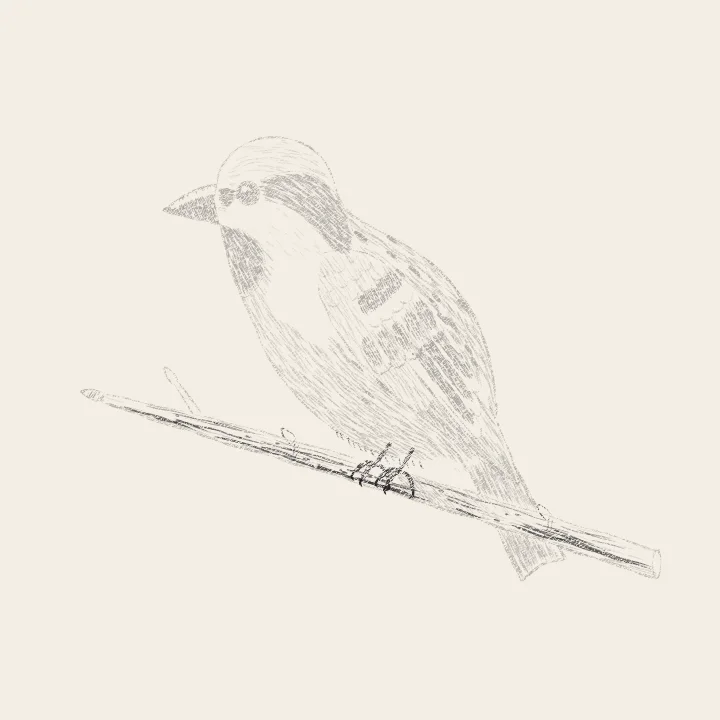 08
08Details
Toes that grip, and bark
Toes wrap over the twig and grip, three forward and one back, each with a small hooked claw. Bark runs along the twig.
-
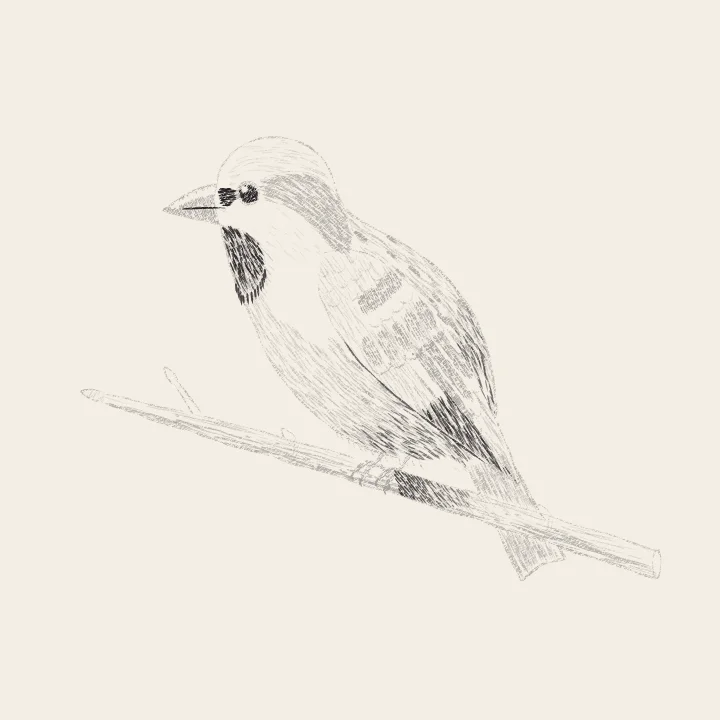 09
09Finishing touches
Darkest darks last
Last, the darkest darks: the eye, the lores, the heart of the bib, the claws and the bird's shadow on the twig.
Teens and adults